ByJohn A
How AI Is Used to Monitor Mining Equipment
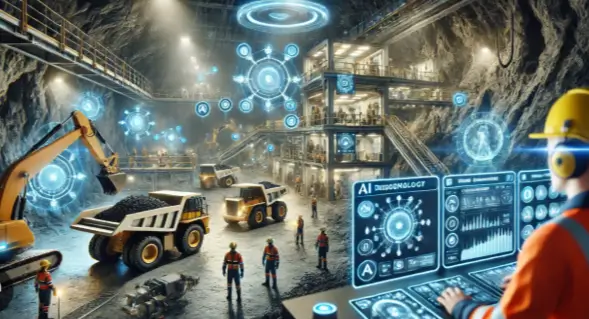
AI-driven monitoring in mining aggregates real-time sensor data, telemetry, and logs to profile equipment health. Baselines are learned, anomalies flagged, and failures forecasted through predictive models. Data visualization translates complex signals into actionable indicators that inform maintenance scheduling and spare-parts planning. Sensor placement, data quality, and governance shape reliability. The coming questions concern integration with operations and the tangible outcomes that sustain uptime, safety, and efficiency, inviting closer scrutiny of methods and results.
What AI-Driven Monitoring Is in Mining Equipment
AI-driven monitoring in mining equipment refers to the use of advanced data analytics, sensors, and machine learning models to continuously assess the health and performance of machinery such as haul trucks, excavators, and drills.
The approach concentrates on predictive maintenance, leveraging data visualization to translate complex signals into actionable insights, ensuring uptime, safety, and operational efficiency with transparent, data-driven decision processes.
How AI Detects Anomalies and Predicts Failures in Real Time
Real-time anomaly detection and failure forecasting in mining equipment rely on continuous data streams from embedded sensors, telemetry, and operation logs to identify deviations from established normative patterns.
Data quality drives model accuracy, while thoughtful sensor placement ensures representative signals.
Algorithms learn baseline behavior, flagging irregularities and predicting failures before impact, enabling proactive maintenance, safer operations, and optimized equipment uptime.
See also: How AI Is Used to Monitor Climate Change
Integrating AI Monitoring With Operations and Maintenance
The approach emphasizes data governance and standardized interfaces, enabling proactive scheduling, parts optimization, and maintenance prioritization.
Real-World Case Studies and Practical Outcomes
What concrete benefits have emerged when mining operations deploy AI-powered monitoring, and how do these outcomes compare across equipment types and site conditions?
In documented deployments, predictive maintenance reduced unplanned downtime by 15–40%, with sensor fusion enhancing fault isolation and early warnings. Outcomes varied by ore grade, climate, and equipment age, yet cross-asset consistency improved maintenance scheduling and operational resilience.
Frequently Asked Questions
What Are the Data Privacy Implications of AI Monitoring in Mines?
AI monitoring in mines raises data privacy concerns and monitoring ethics, including worker surveillance scope, data minimization, consent, retention, and governance. It supports safety and efficiency while demanding transparent policies, accountability, independent audits, and balancing autonomy with collective risk reduction.
How Cost-Effective Is AI Monitoring for Small-Scale Operations?
Cost-effectiveness for small-scale operations varies; a cautious cost-benefit analysis often shows favorable payback with scalable sensors and cloud analytics, while maintenance scheduling optimizes uptime, reducing downtime costs and extending asset lifespans in a measured, freedom-valuing manner.
Can AI Monitoring Replace Human Maintenance Entirely?
AI autonomy cannot fully replace human maintenance; it functions best as a Maintenance complement, handling routine diagnostics while humans address complex issues. Data-driven, methodical analysis supports decision-making, sustaining safety and autonomy with adaptive, transparent, cost-aware implementation for freedom-seeking operations.
What Are the Cybersecurity Risks of AI in Mining Equipment?
A hypothetical mine incident illustrates how cybersecurity threats can disable autonomous drills, halt data streams, and erode trust. Threats compromise data integrity, enabling manipulated readings. Analysts emphasize rigorous access controls, encryption, and continuous monitoring to mitigate evolving cybersecurity threats.
How Scalable Is AI Monitoring Across Multiple Sites?
AI scalability across sites improves with standardized data schemas and modular architectures, enabling cross site integration. The analysis demonstrates diminishing marginal latency and increasing ROI as telemetry and dashboards consolidate, supporting autonomous decision-making while preserving operational freedom and resilience.
Conclusion
AI-driven monitoring in mining translates sensor data into actionable maintenance actions, reducing unplanned downtime and extending asset life. Real-time anomaly detection and predictive forecasting enable targeted interventions, while data visualization and governance ensure transparent decision-making. Integrating monitoring with operations optimizes scheduling and parts management, yielding measurable uptime gains and cost savings. As the adage goes, “trust but verify”—continuous validation of models and data quality is essential to sustain accuracy and reliability in dynamic mining environments.